Art deco in full colour: the Schneider glassworks
A talented duo: the brothers Ernest (1877-1937) and Charles (1881-1953) Schneider
Promising beginnings with Daum in Nancy
Charles shaped his talent in the burgeoning period of Art Nouveau: he took lessons at the Fine Arts Academy while working, from 1902, for the Daum studio. This glassworks’ economic and artistic boom also coincided with the presence of the Schneider brothers. Charles designed models of vases while Ernest held an administrative position. A change of management at Daum led to the departure of many employees. Ernest was let go in 1911 with a substantial severance payment and Charles also left the firm.
A family business: the Schneider glassworks, in the Paris region.
The Schneiders, who had owned a glassworks in Épinay-sur-Seine since 1913, were ruined by the war but benefitted from foreign funding to relaunch their artistic output. In 1923, with the support of their family, the brothers managed to regain the control of their company. Ernest’s managerial acumen combined with the talent of Chales ensured success for the original products they produced. The company underwent modernisation and hired new skilled assistants.
In order to cover the French and foreign markets, a subsidiary brand was created in 1918: “Le verre français Charder” (the latter word being a contraction of CHARles SchneiDER). This new range was aimed at a larger audience and included more affordable items sold in major department stores.
A noteworthy participation in the International Exhibition of Modern Decorative and Industrial Arts (in Paris in 1925) strengthened the Schneiders’ reputation. While the company reached its peak in the roaring twenties, the following decade marked by the economic crash of 1929 witnessed the firm’s decline until its bankruptcy in 1938. The factory was destroyed during the Second World War but a smaller establishment was rebuilt in 1946, under the name of Cristallerie Schneider. The glory days were over and in 1981, due to a lack of buyers, the Schneider firm closed its doors.
Out-of-the-ordinary French production
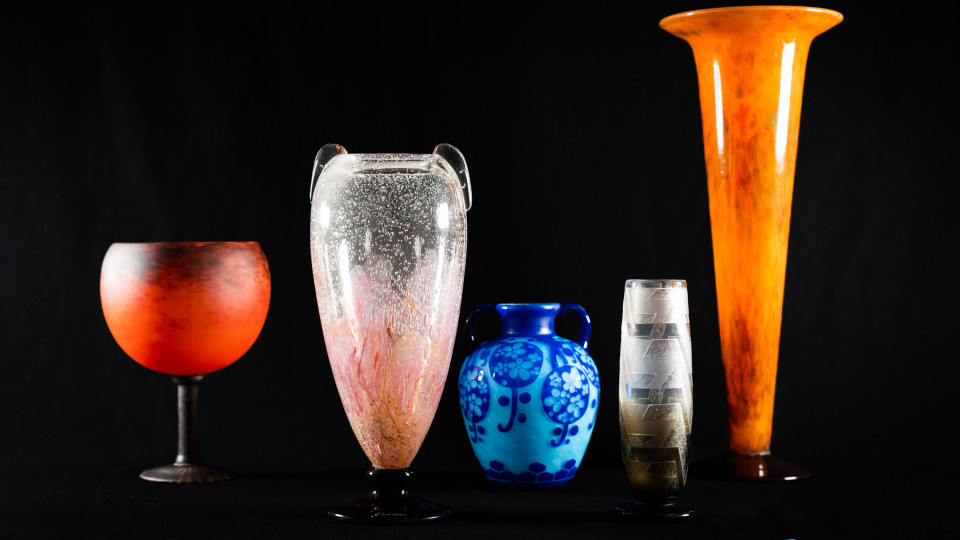
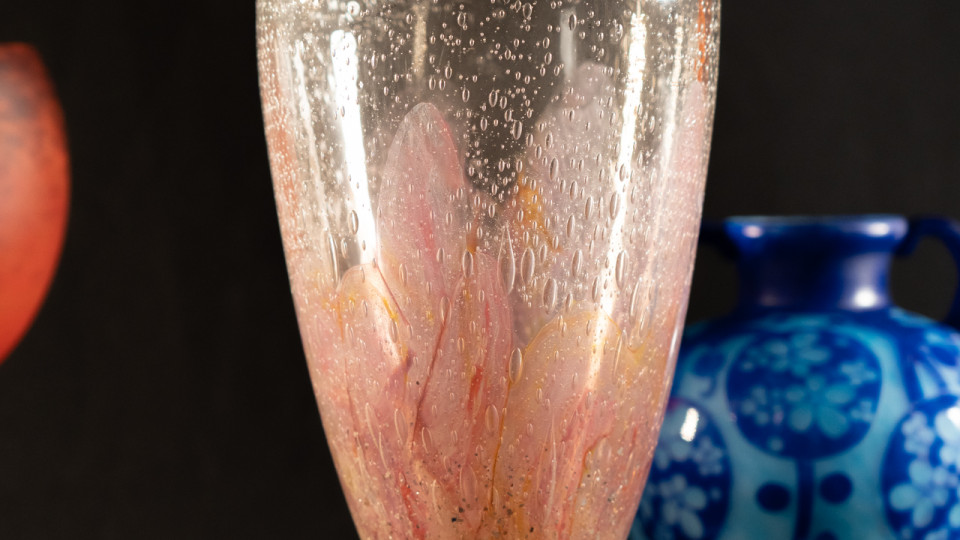
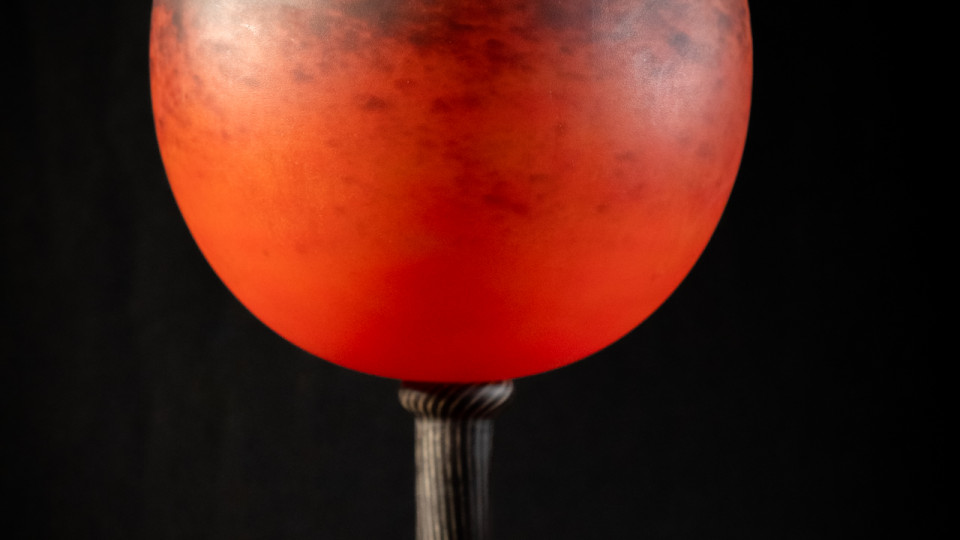
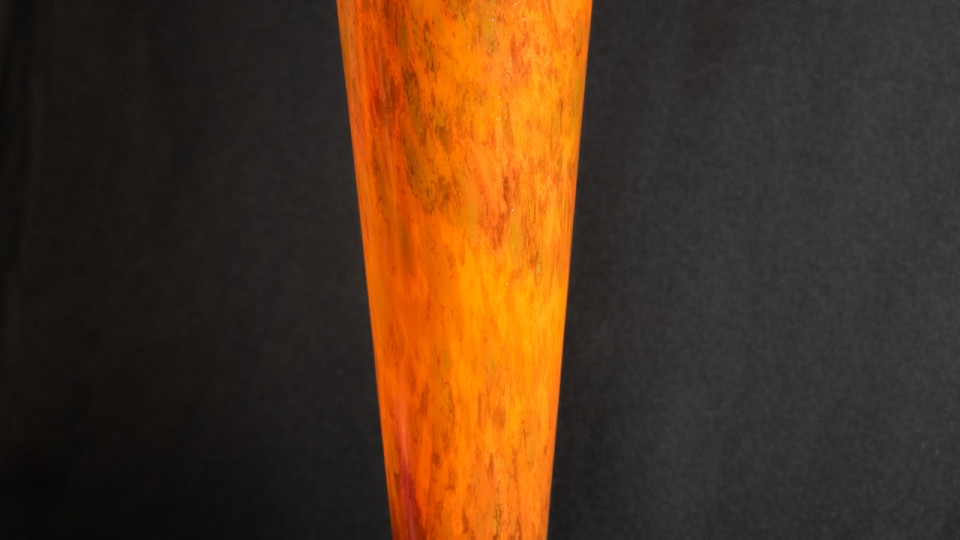
These delicate, brightly coloured coupe glasses, inspired by the Venetian style as can be seen in the discreet filigree on the stem, took their place on the fringes of the French Art Deco movement, which advocated sleek lines and reduced colour. However, it was precisely such production of shimmering works in glass with dark coloured feet that helped to ensure the young company’s success. Its collaboration with chemical engineers was at the root of an incredible colour palette, including the famous ‘tango’: a blazing orange vermilion. Like a fauvist painter, Charles played mainly on contrasts and complementarity of colours. His preferred process was heat-forming characterised by the powdering of oxides sandwiched between layers of colourless glass, giving the cooled glass speckling sometimes reminiscent of jade or marble. He also shaped the material ornamentally, through the inclusion of air bubbles in thick glass, providing a random, playful and luminous effervescence.
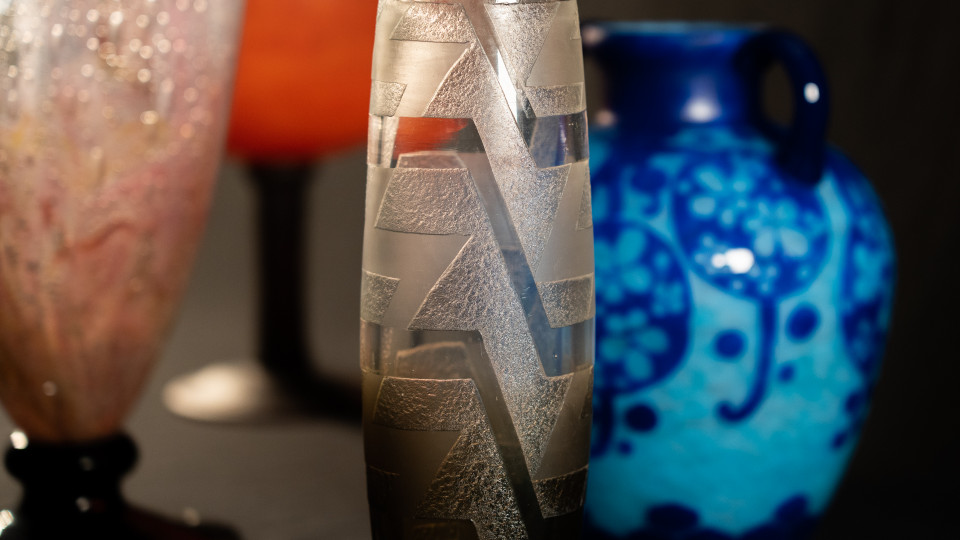
Following the exhibition in 1925, Schneider reached a turning point: the quest for simplicity led to the reduction or absence of polychrome glass in favour of monochrome glass that was body tinted and acid etched with geometric patterns. This trend reached its peak in the late 1920s due to both fashion-based and economic reasons. The shaping of subtly coloured solid parts, adorned with important heat-formed applications (bulges, gadroons, cabochons, etc.) was typical of the 1930s.
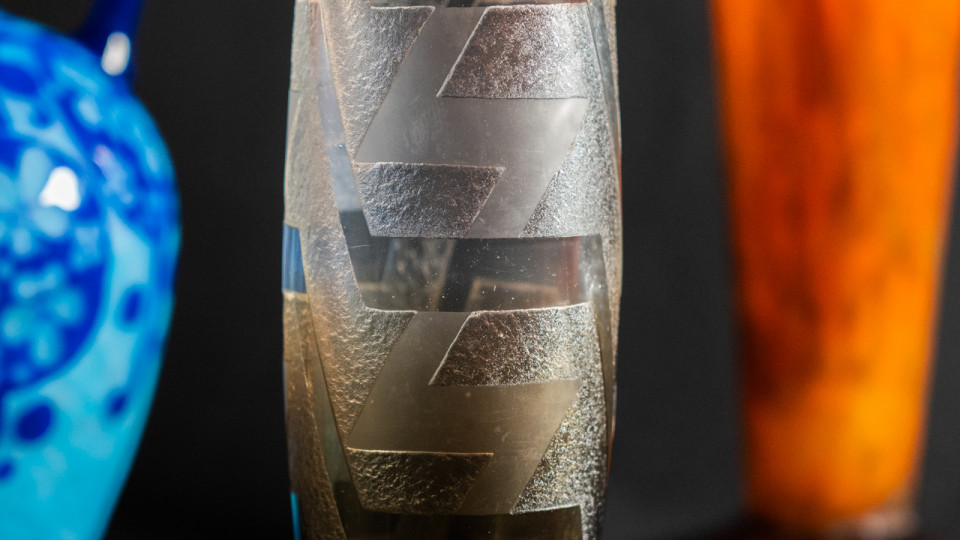
The names of the different series of pieces evoke their style or decoration, for example, Jades or Marbrines for their minerality, Rustiques or Écailles for vases with a raw bubbling effect, Côtes or Z according to the decoration on acid etched pieces, or Cabochons or Gadroons for pieces with robust heat forming, though this list is not exhaustive. Part of the Collection at the grand Curtius museum guided this selection.
Viewing pleasure at the museum
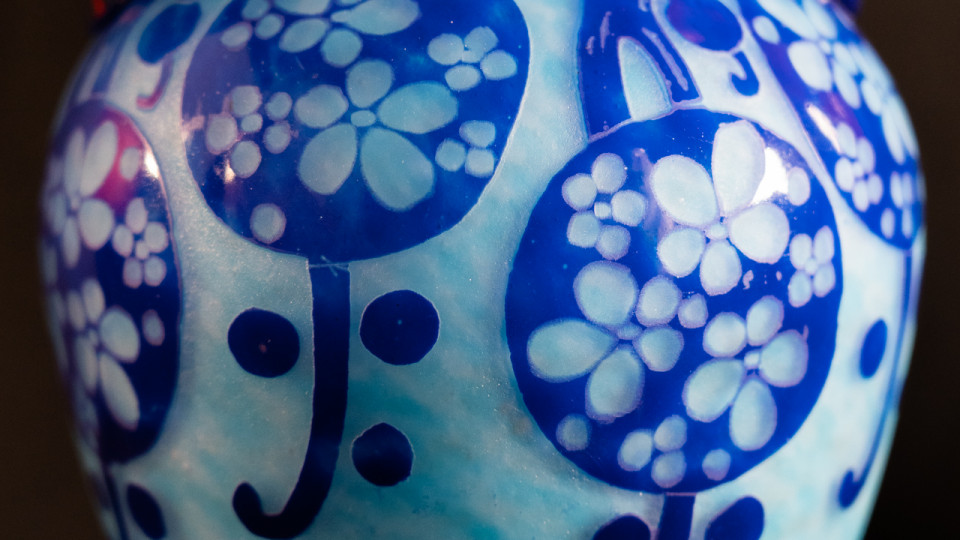
Vase with handles, circa 1920, blown and speckled glass, H: 41 cm. Inventory number: 59/96
Vase Jades, v. 1925, blown and speckled glass, H: 55.5 cm. Inventory number: 58/284
Coupe, 1918-1928, blown, speckled and satin-finish, made by Schneider, H: 28 cm. Inventory number: 64/51
Vase Écailles, 1925-30, blown and bubbled glass, made by Schneider, H: 39 cm. Inventory number: 59/60
Vase, 1923-1926, blown and acid etched glass, H: 21.5 cm, made by Charder. Inventory number: 74/30
Vase Z, 1928-1930, blown and acid etched glass, made by Schneider, H: 24.6 cm. Inventory number: 59/54

For further information...
Edith Mannoni, Schneider, [1992], Paris, published by Massin.
Charles Schneider master glassmaker. Schneider France glass works, from 1913 to 1940, exhibition catalogue, Louvre des Antiquaires store, Paris, 1984.
Helmut Ricke, Schneider France. Art Deco glass, Hanover, 1981 (travelling exhibition catalogue, 1981 to 1983, Düsseldorf, Hannover, Coburg).
Isabelle Verhoeven
Curator
Glassware Department, Grand Curtius
Object location
The glasses are currently visible in the object of the month showcase in the entrance hall of the Grand Curtius Museum in Liège.
Captions for visuals
Schneider glassworks - Grand Curtius.
Copyright: City of Liège - Grand Curtius.