A pair of nautiluses that raise questions
Shells in the history of art
While mother-of-pearl from shells has been used since the Antiquity to adorn precious objects, thanks to the Age of Discovery, interest in the diversity and beauty of the specimens themselves grew in Europe.
From the late 16th century, the nautilus pompilius from the Pacific Ocean was much sought after, to take pride of place in cabinets of curiosities, especially in Germany and the Netherlands, following the development of trade from the East Indies. The outer layer of the shell was often stripped away to reveal the pearly surface underneath. The richly engraved pieces were then mounted with silver and gilt-silver, in the form of drinking cups that were more decorative than practical.
The success of such specimens then spread to England and France, lasting throughout the 17th and 18th centuries, as shown by their presence in still lives or in the naturalia collections of Enlightenment scholars.
These objects are purely decorative, nothing more than trinkets to be displayed for guests to see in order to dazzle and intrigue them. They are often unique pieces and it is very rare to find pairs.
Today, the various species of nautilus are threatened by over-fishing. Since 2016, trade in nautiluses is governed by the Washington Convention.
The pair of nautiluses at the Grand Curtius
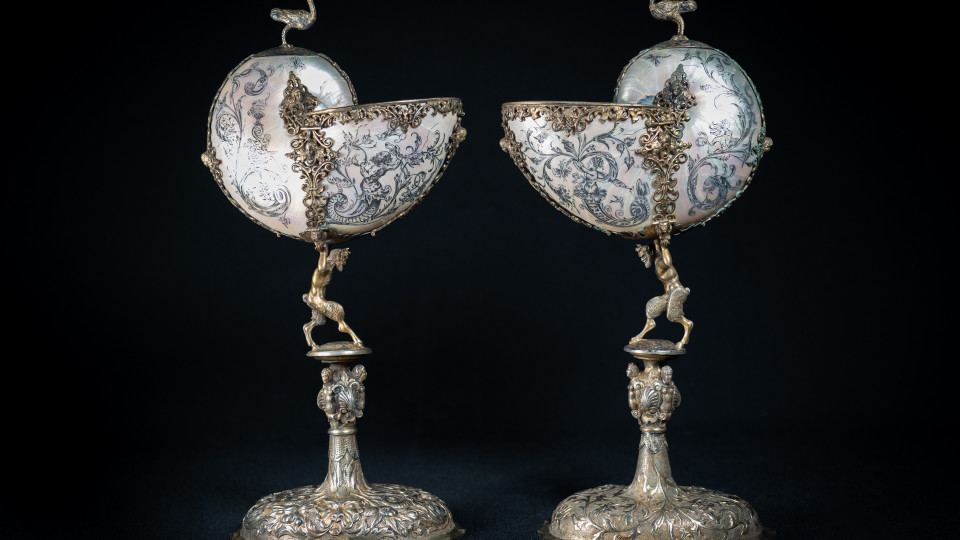
In 1910, thanks to a large donation made by Miss Sophie Moxhon (including more than 2,500 objects), this astonishing pair of nautilus cups was added to the collections at the Grand Curtius.
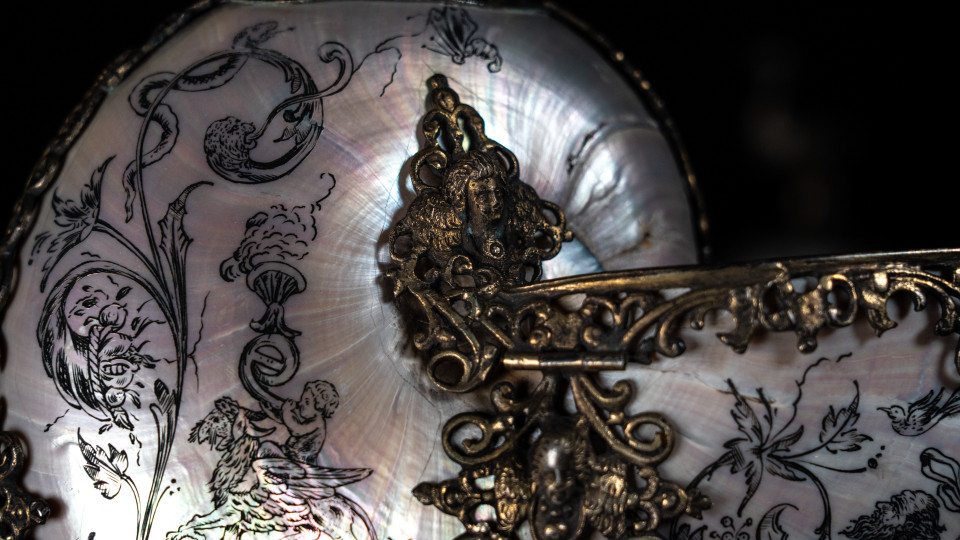
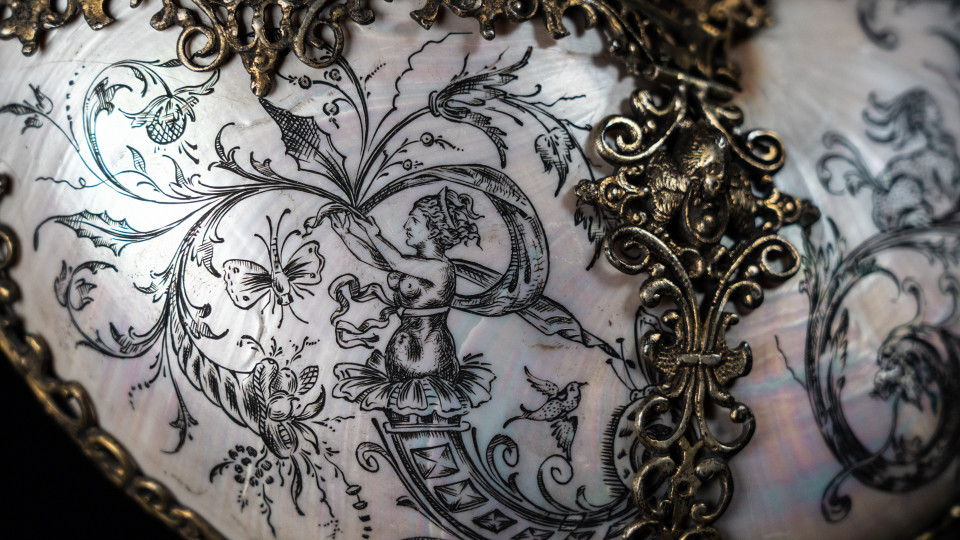
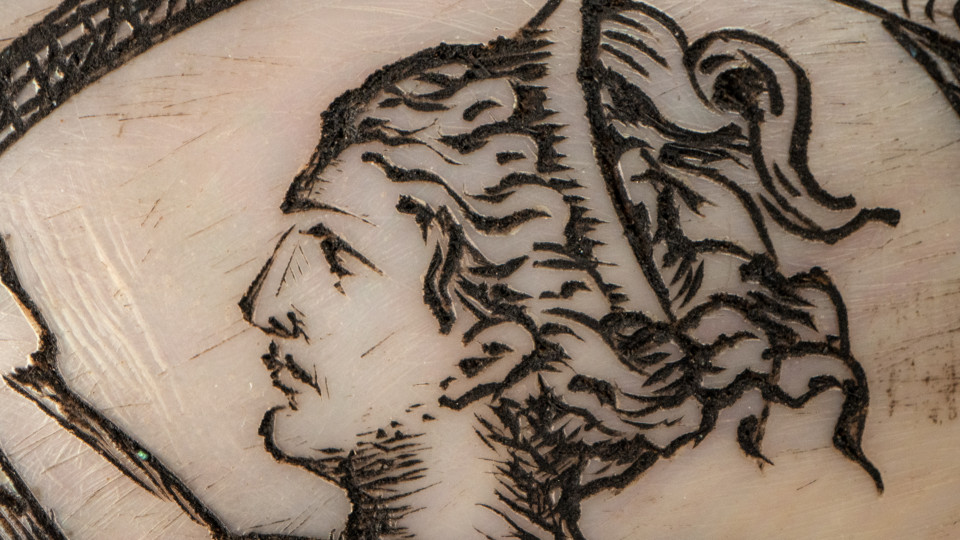
The shell’s surface was polished to a mother-of-pearl finish using a grinder or acid and then was carefully engraved with a décor of fantastical characters (sphinx, Terminus, etc.), scrolls, flowers, animals and horns of plenty. The incisions were highlighted with black ink to make them visible. The nautilus was then inserted into a chiselled silver mount that was partially gilded and decorated with figures as well as ornaments. Openwork net strips, joined by hinges, followed the structural lines of the shell to attach it to the pedestal. The presence of hinges confirms that these pieces were regularly disassembled for cleaning.
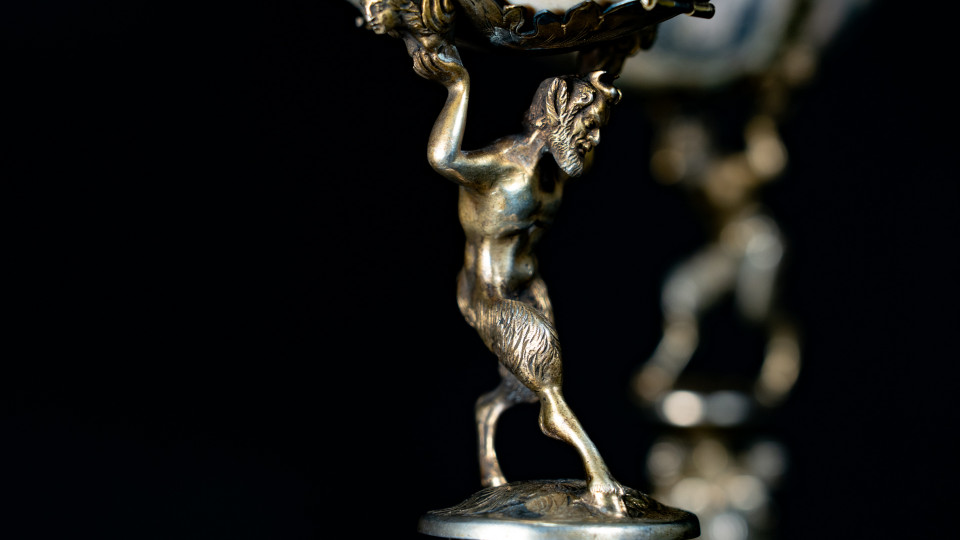
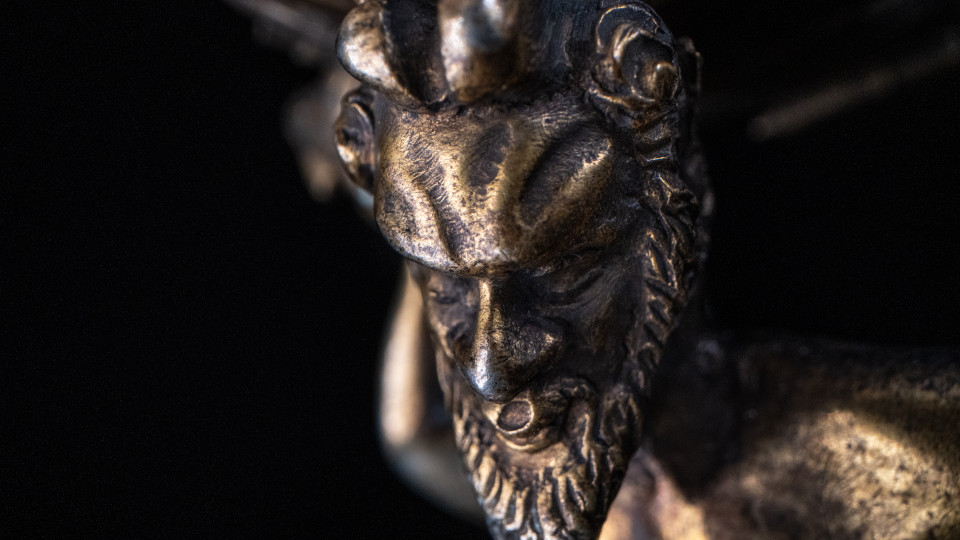
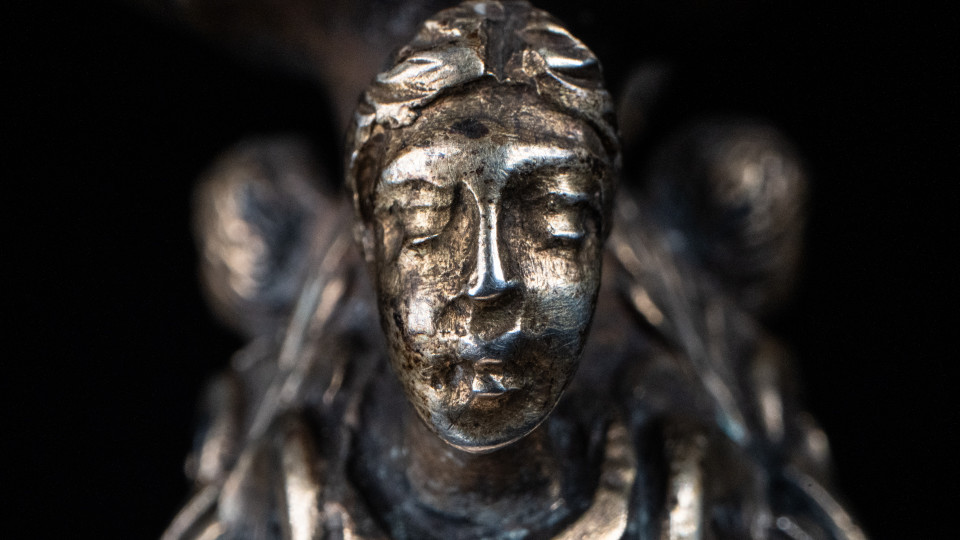
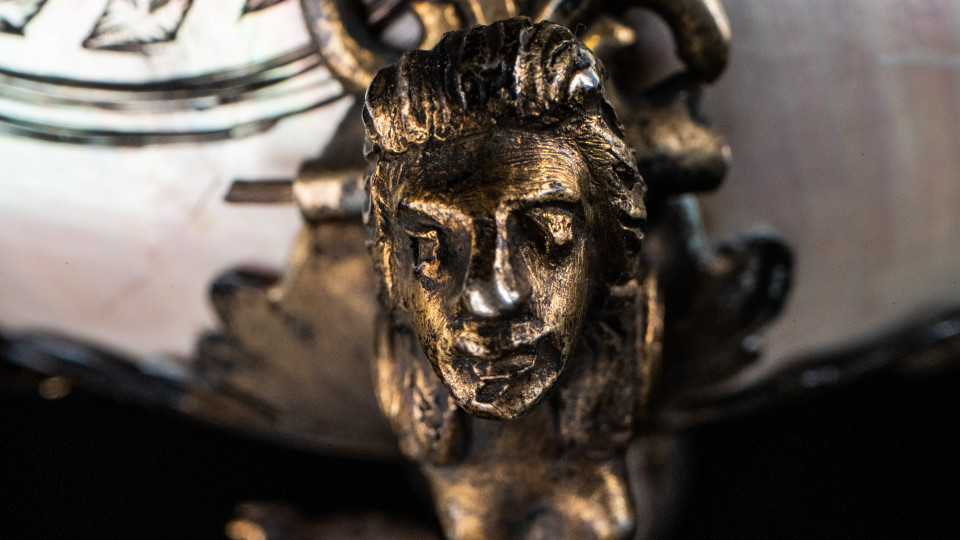
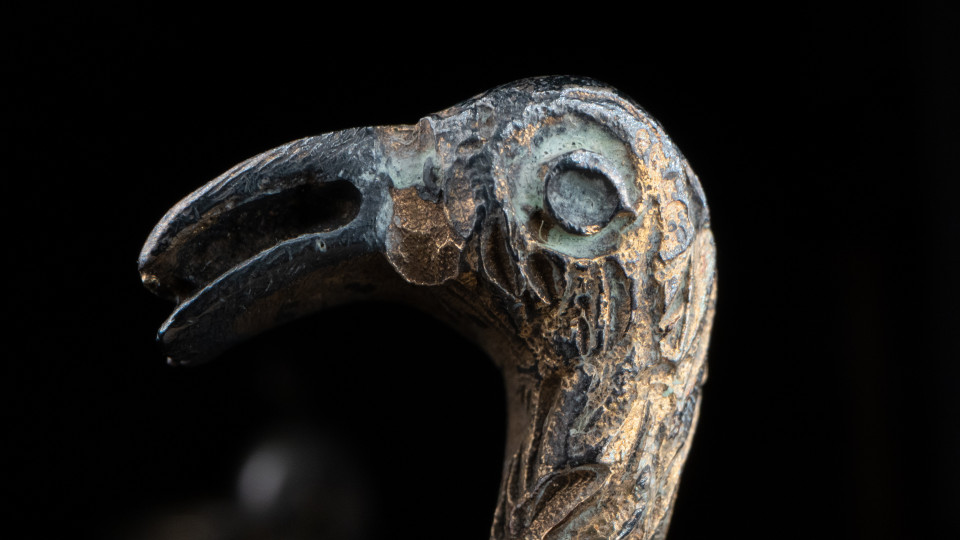
The decoration on the mounts is often related to marine themes or to drinking: the cups are supported by a satyr figure sculpted in the round, atop a cask decorated with three female busts (either nymphs or harpies) alternating with scallop shells. At the top of the cup sits an ostrich sculpted in the round.
Unlike the upper parts, the two pedestals are not identical. The one on the left boasts a décor in relief made up of mascarons, scrolls and horns of plenty, in a shape and technique in harmony with the rest of the cup. The other pedestal is more classical in appearance and is decorated with finely chiselled scrolls, which do not seem to be original.
Mysterious origins and dating
In the case of the cups at the Grand Curtius, the pedestals are not from the same era, which explains the presence of different hallmarks on the edges of the pedestals. The décor of the straight pieces is more delicate and more recent. Two theories are possible: either it is a pair produced at the same time, dating from the 17th century, one of which (the piece on the right) had to have its pedestal restored, probably due to damage that also affected the shell, or the left hand piece was a single, separate cup created in the 17th century, for which a similar copy was made during the 19th century. However, in the case of the second hypothesis, why would a different pedestal have been used for a copy that was perfect in all other aspects?
Identifying the hallmarks will probably help to clarify the issue of how old this pair of nautiluses are and where they were made.
Carmen Genten
Curator
Decorative Arts Department, Grand Curtius
Object location
The nautiluses are currently visible in the object of the month showcase in the entrance hall of the Grand Curtius Museum in Liège.
Captions for visuals
Pair of nautiluses - Grand Curtius.
Copyright: City of Liège - Grand Curtius.
Selective bibliography
- Pierre Kjellberg, in Mounted objects from the Middle Ages to the present day, published by Editions de l’Amateur, 2000.
- Serge Alexandre, The nautilus cup, in the review Art&fact n°15 (Mélanges Pierre Colman), 1996, pp. 122-124.
- https://collections.vam.ac.uk/item/O11013/nautilus-cup-partridge-affabel/
- https://www.rct.uk/collection/50603/nautilus-cup
- https://www.rct.uk/collection/themes/trails/wunderkammer-cabinet-of-curiosities/nautilus-cup-0
- https://collections.louvre.fr/ark:/53355/cl010113799
Musée de Liège