Autumn will be a musical affair
Autumn will be a musical affair
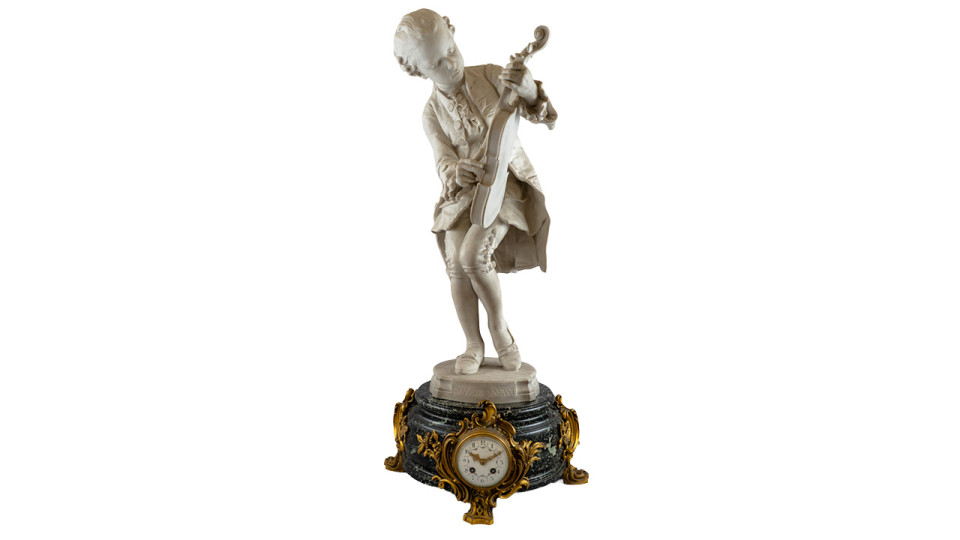
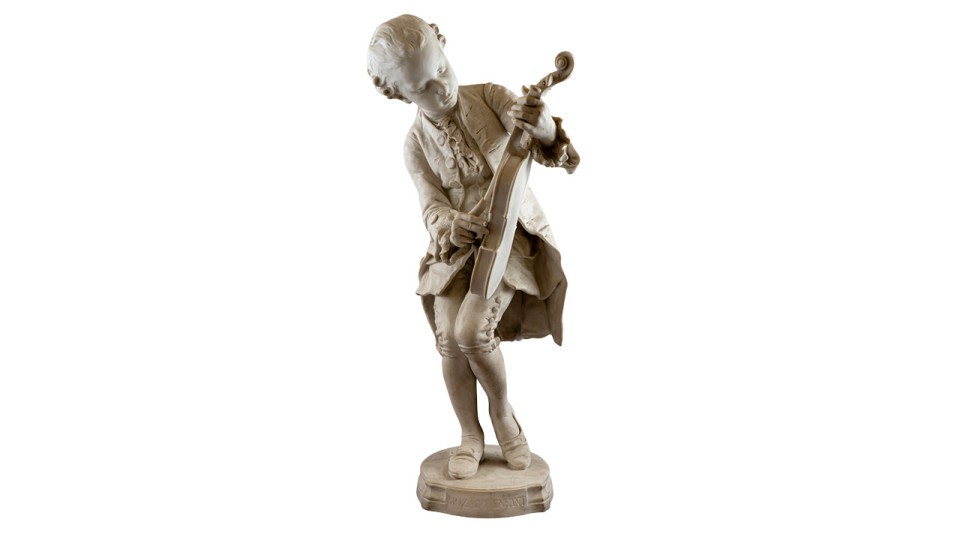
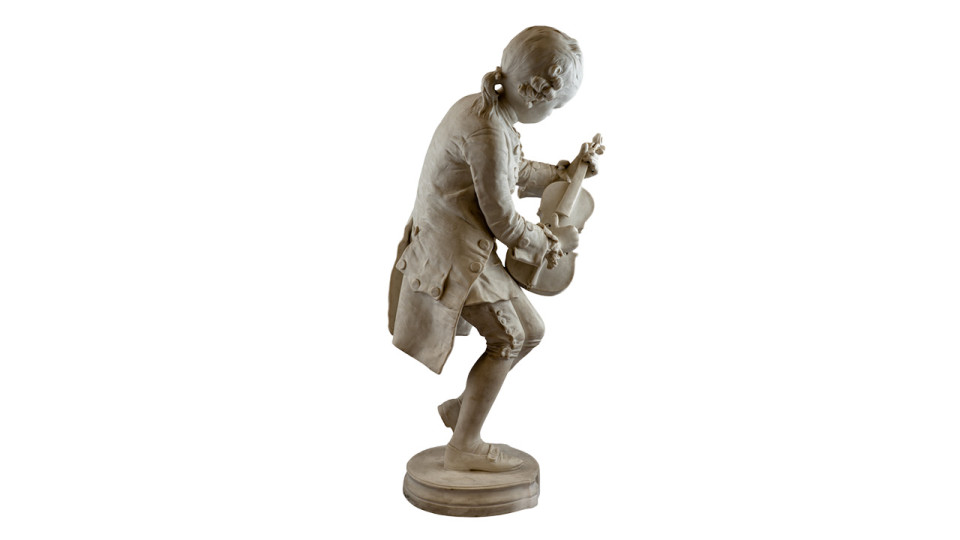
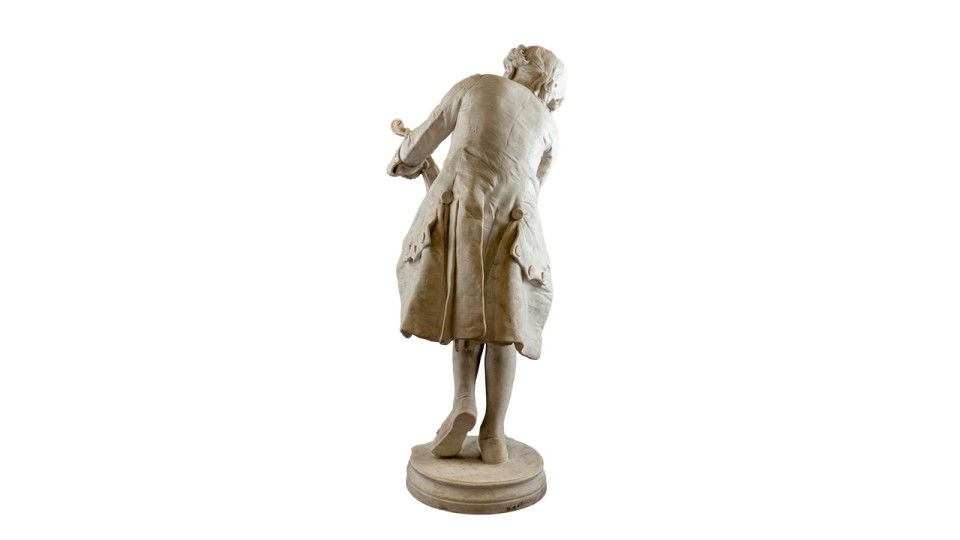
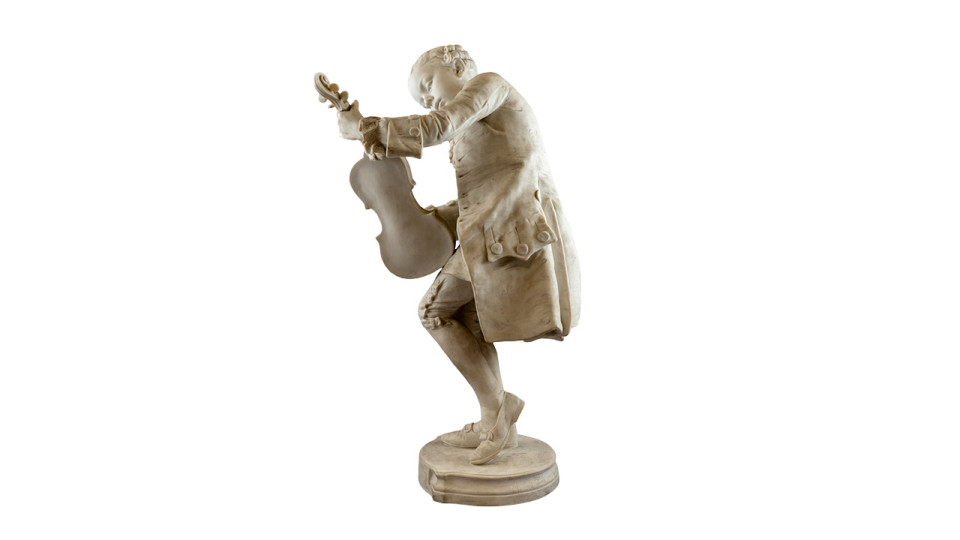
Mozart as a Child
c. 1883
Sèvres Porcelain Manufactory, after a bronze by Louis-Ernest Barrias (1841–1905)
Porcelain biscuit on a marble and bronze plinth (not original)
63 x 19.5 cm (without plinth)
Inv. No. 94/14
Grand Curtius Collection – Department of Decorative Arts
Bequest of Ginette Maréchal, 1994
From October 16th 2026, the Grand Curtius will present the exhibition When Paganini Meets Ysaÿe: The Devils’ Violins. Among the Italian virtuoso’s favourite composers was another child prodigy of classical music: Wolfgang Amadeus Mozart.
This biscuit porcelain sculpture depicts the young Wolfgang Amadeus Mozart (1756–1791), captured in the midst of a musical performance. The Austrian composer epitomises the precocious genius who captivated the courts of Europe in the 18th century. During his early years as a virtuoso, a period in which he travelled throughout Europe, he was presented at the court of Versailles as early as 1763 before Louis XV and the Marquise de Pompadour. The young boy then became a true object of fascination for the French aristocracy.
It is precisely against this backdrop of the arts flourishing at court that the history of the Sèvres porcelain manufactory unfolds. This famous manufactory, originally known as the Vincennes manufactory, was founded in 1740 with the support of Louis XV and the Marquise de Pompadour. In 1756, it was moved to Sèvres so that it would be situated between the king’s palace and the Marquise’s residence. It would go on to become a showcase for the excellence of French craftsmanship.
Among the innovations that made it famous is one technique, which has remained emblematic of the manufactory: porcelain biscuit. This refers to a piece of porcelain that is neither glazed nor coloured, fired once at a high temperature. This technique was pioneered in the 18th century by the Marquise, with the aim of distinguishing French production from that of other European manufacturers, notably Meissen in Germany.
The biscuit is produced in the moulding workshop, where the craftsmen reproduce the sculptures from a plaster original and a set of moulds, which refers to all the parts required to create a piece. A mould can consist of up to one hundred and forty pieces.
First, the porcelain slip is pressed into the plaster mould components to capture the details and ensure an even thickness. The mould sections are then assembled using a liquid mixture of clay and water. Before demoulding, it is necessary to wait for the plaster to absorb the water from the slip by capillary action. Next comes the repair stage, which involves reworking the piece whilst it is still raw: the craftsman removes the seams left by the mould using metal tools and may refine the sculpted details. Finally, the piece undergoes a single firing at 1380°C in a dedicated kiln, after which it is polished in the polishing workshop.
Whilst the biscuit alone forms the heart of the work, the presence of a clock in the marble plinth, embellished with bronze elements beneath the young musician’s feet, creates a powerful allegory: time passes, but Mozart’s art and fame remain intact.
Angelina Taboga-Delattre
Cloé Vaichere
Students at the École de Condé, Paris
Exhibition location
The objects are on display in the ‘Object of the Month’ showcase. Entrance hall of the Grand Curtius Museum in Liège.
Photo copyright: City of Liège – Grand Curtius