RESTORATION OF LEATHER ITEMS FROM THE STUDY OF EUGÈNE YSAŸE
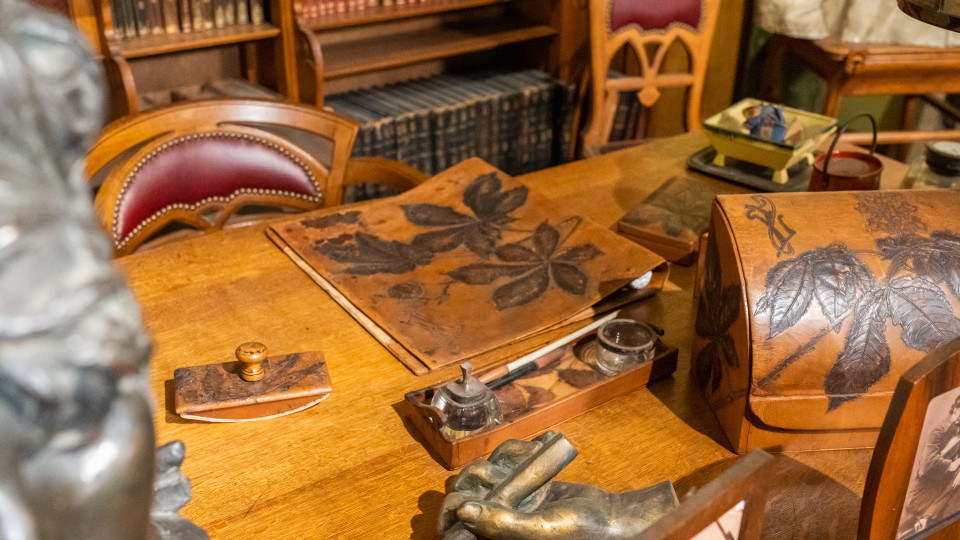
It was in 1894 that the famous violinist and composer from Liège Eugène Ysaÿe (1858-1931) had a house built in Brussels on Avenue Brugmann. For the occasion, he commissioned an entirely furnished workspace from his friend, architect Gustave Serrurier-Bovy. This unique testimony to the encounter between two renowned artists of the late 19th century is now part of the City of Liège’s collections, thanks to a donation by Eugène Ysaÿe’s heirs.
Following the death of Eugène Ysaÿe in 1931, his children bequeathed this studio to their father’s hometown, to keep his memory alive. After being faithfully reconstructed in the premises of the music academy on Rue Forgeur, the studio was then transferred in 1977 to the Architecture Museum, in Impasse des Ursulines. Following the definitive closure of this museum in 1990, the opening of the Grand Curtius Museum was the next occasion for the musician’s studio to be admired. Today, a room in the museum is entirely devoted to him in the Grand Curtius’ permanent exhibitions. The will of his heirs “to open up the intimate secrets of a man whose name will be remembered forever to anyone who wishes” is thus respected.
The studio features a large wall-mounted bookcase with a built-in piano, a large desk with a partition door, as well as numerous pieces of furniture and decorative items. Among these objects, it was observed that some were in a poor state of repair. Such was especially the case for the composer’s personal belongings adorning his desk.
Thanks to financial support from the King Baudouin Foundation’s David-Constant Fund in 2020, we were able to entrust the most fragile items to a specialist restorer, Luc Hautekeete. The aim of this process was to reduce the traces of time plus wear and tear in order to ensure the long-term preservation of the objects. The interventions were therefore limited to consolidation, cleaning and a few cosmetic alterations.
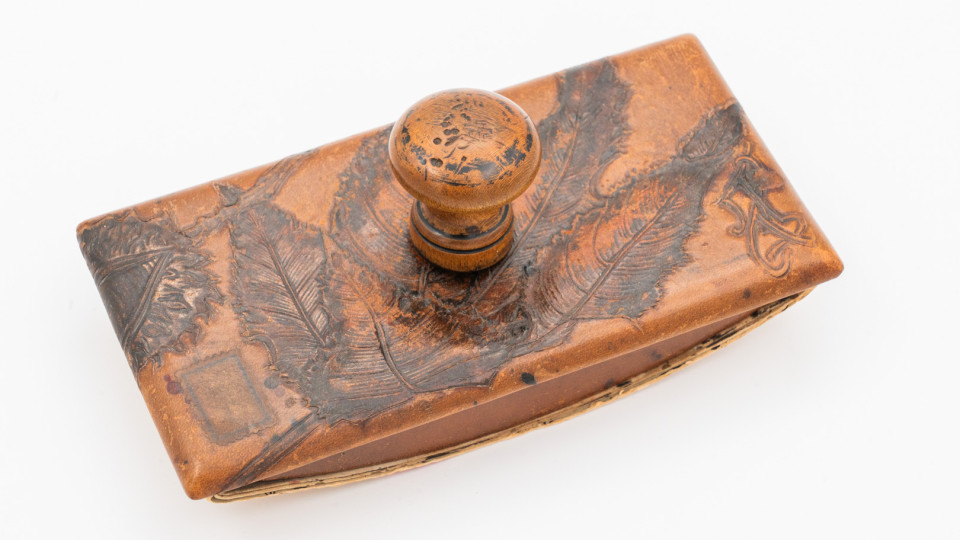
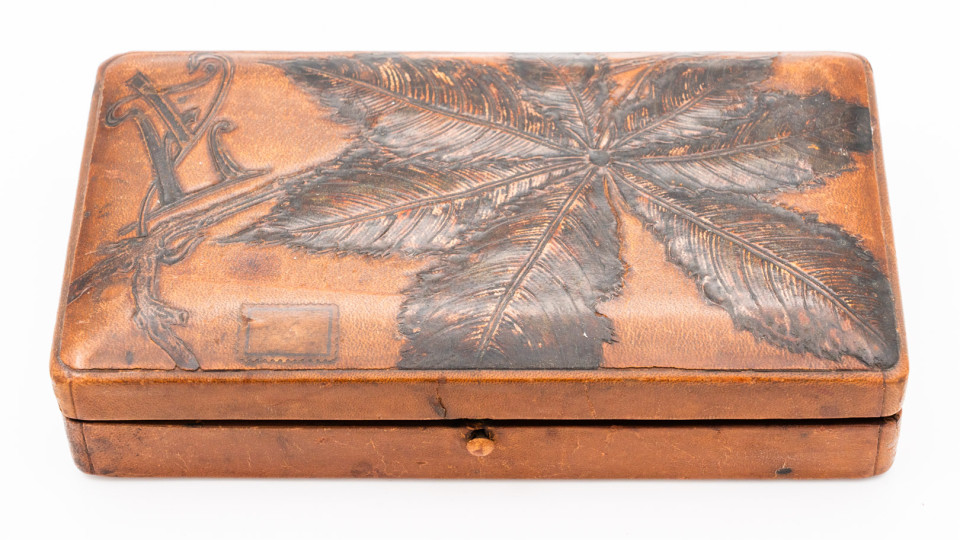
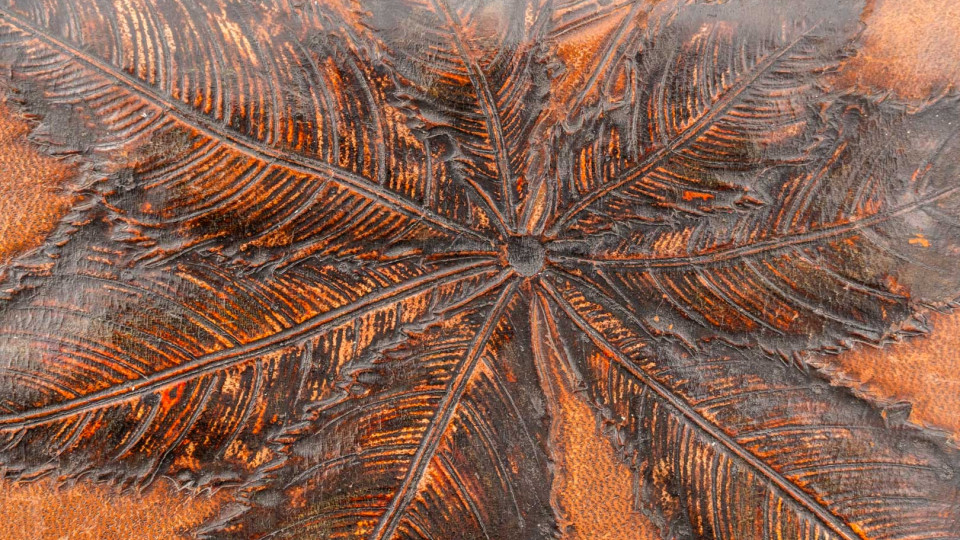
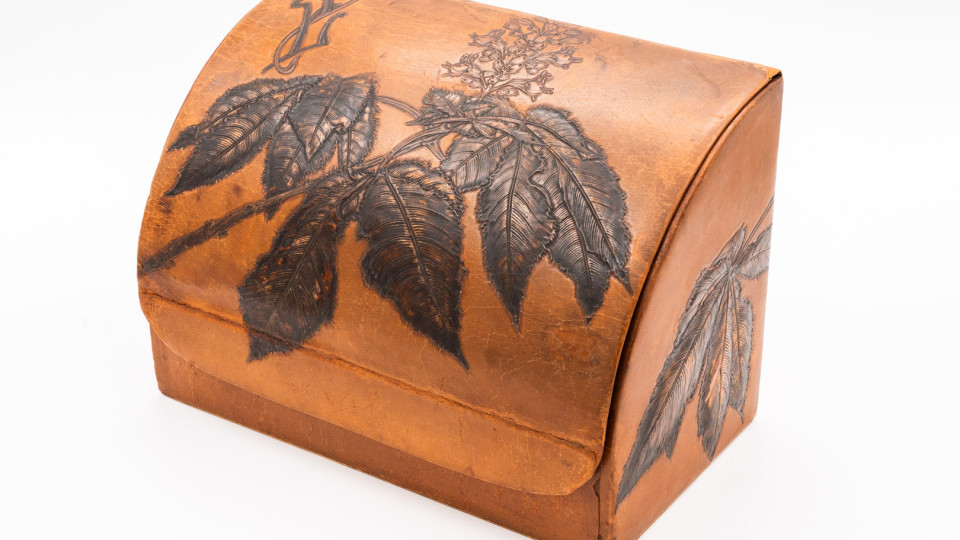
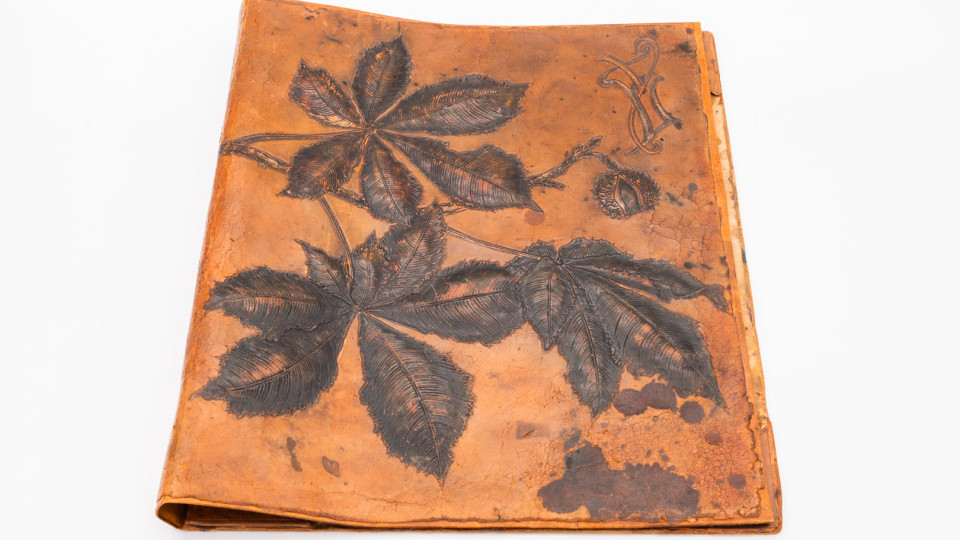
Some of his leather items are on display here, including blotting paper, a letter holder, a blotter, a box and a trinket bowl. The embossed leather is adorned with horse chestnut leaves, while the initials ‘E’ and ‘Y’ are harmoniously intertwined. The technique of leather embossing is used to highlight a design in the leather. To achieve this, the leather fibres are crushed by hammering around the design to create a shape in relief. The design thus created is generally enhanced by dyeing the leather or even applying metallic gold leaf.
Unlike works of art, these objects for everyday use are worn due to the prime purpose for which they were used. Such usage and wear led the restoration team to adopt a minimal approach, with the priority on ensuring their survival as a historical testimony, without obscuring the traces and remnants of these objects’ material history.
All the items were very dirty. With age, the leather became acidic and very brittle. The weakened leather fibres displayed many cracks and tears, as well as gaps caused by the material's brittleness. The items clearly display traces of frequent use. The hinges of the blotter, letter holder and case were badly torn. Thanks to the work carried out, the objects have been stabilised, even if they remain fragile.
Audrey Jeghers Curator – Restorer / City of Liège Museums
Exhibition location – object of the month
The artefacts are visible in the object of the month showcase in the entrance hall of the Grand Curtius Museum in Liège.
Captions for visuals
RESTORATION OF LEATHER ITEMS FROM THE STUDY OF D’EUGÈNE YSAŸE.
Copyright: City of Liège - Grand Curtius.