Féronstrée: a medieval relic unearthed during tram construction work
Liège: archaeological monitoring along the tram route
Discovery of waste from a medieval woodcarving workshop in Féronstrée
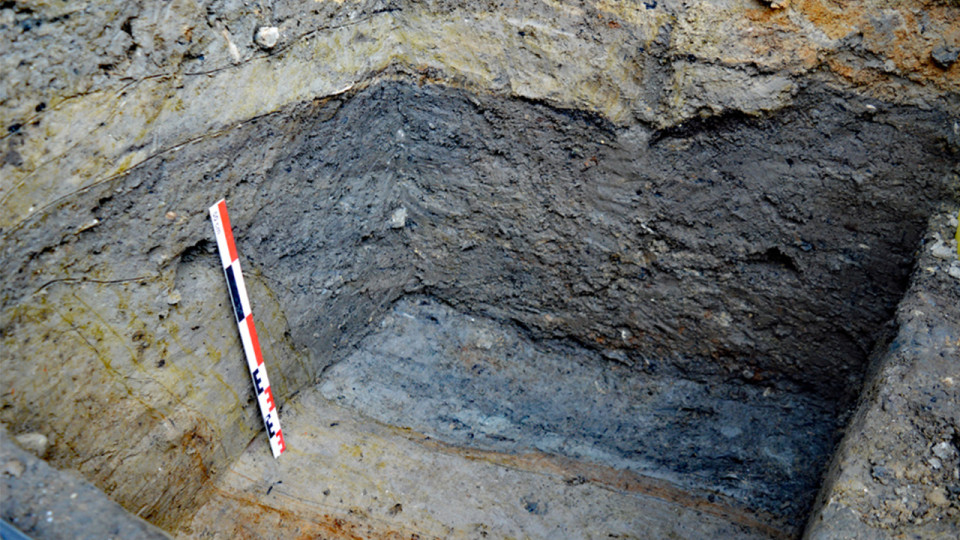
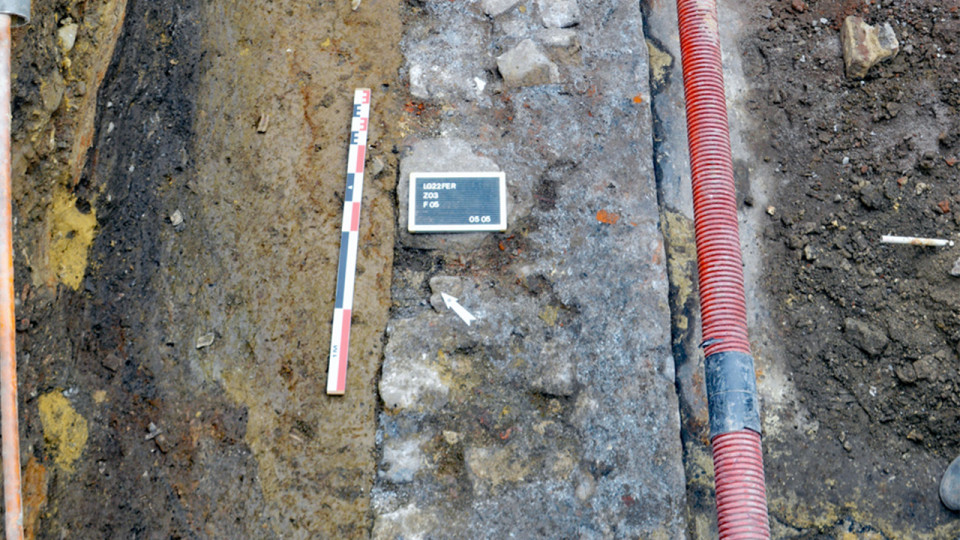
Between January and September 2022, a team from the non-profit organisation RPA (Recherches et Prospections archéologiques) assisted archaeologists from the Walloon Heritage Agency (Eastern Zone Operational Directorate) as part of the monitoring of tram infrastructure works in Liège city centre. During May, the field team was called in following the excavation of a 4.5-metre-square inspection chamber in Féronstrée, at its junction with Rue des Aveugles (Lambert coordinates 72: 235993 east/149269 north). The bottom of the excavation, reaching a depth of 2 m (altitude: 60.45 m), revealed the foundations of a modern cellar, the location of which corresponds to the former building line along the roadside, still visible on the original cadastral map. In front of this cellar, the outer edge of the backfill of a former sewage ditch was visible. This ditch begins to turn towards Rue des Aveugles, suggesting that it must have joined the Meuse by following the course of this road.
A single test pit 1 m deep allowed this feature to be observed in cross-section, without reaching the bottom. The fill of the ditch contains a significant amount of anthropogenic waste and is characterised by a fine sub-horizontal stratification, marked by successive episodes of flooding or runoff. Its wall shows a vertical profile cut directly into natural alluvial deposits. In contact with it, the surrounding silt shows a broad band of discolouration highlighted by a rim of precipitated oxides, confirming the presence of stagnant water within the structure.
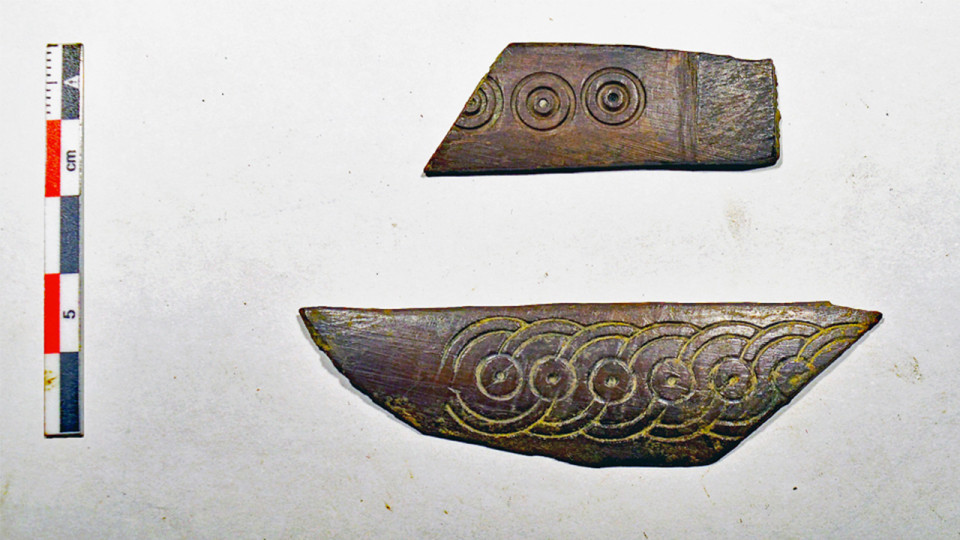
The ceramic assemblage associated with the filling of the ditch is homogeneous and typical of the productions of the first phase of the so-called Andenne workshops, dating from the mid-11th century to the third quarter of the 12th century. Furthermore, a collection of 6 kg of faunal material was recovered by visual inspection, from an excavated volume of the structure not exceeding 3/4 m³. This faunal assemblage was subjected to a rapid archaeozoological analysis. Cattle are the most common, accompanied by finds of equids, suids, caprids and, more sporadically, cervids, geese and cats. The discarded elements are mainly rib segments, mandibles, vertebrae, metapodials and the bony bases of bovine horns. Many pieces show clear signs of working and clearly reflect the activity of a nearby bone-carving workshop, rather than being ‘mere’ waste from consumption or butchery, although it is possible that these bones have multiple origins.
In any case, it appears that our collection largely reflects the production of small decorative appliqués, probably intended to adorn tool handles or furniture. The entire production process is illustrated, from the selection of skeletal remains suitable for crafting flat plates to their manufacture using a saw, a chisel and polishing. Some of these feature perforations at both ends. Numerous rough-cut pieces or waste material from decorated appliqués have also been unearthed. The decorative motifs mainly consist of ocelli formed by two to three concentric circles, either aligned or interlaced, and, more rarely, chevrons. Finally, the presence of bone pegs could also indicate the use of horn. A thorough archaeozoological analysis will be necessary to explore these various aspects.
The discovery of discarded tablet fragments from the High Middle Ages in the City of Liège is not entirely unexpected. Indeed, the working of hard animal materials generally experienced a veritable ‘golden age’ in the historical record between the Carolingian period and the High Middle Ages. However, the socio-economic context of this activity cannot yet be fully grasped in all its historical complexity. To what extent was this activity carried out by specialised craftsmen? To what extent were they itinerant? Did they work exclusively on commission, or also for the market? On what scale?
Whilst it is, at this stage of research, premature to venture into these questions, it can already be noted that the tabletterie activity uncovered in Féronstrée forms part of the development of the Saint-Thomas suburb. This area centres on the Saint-Barthélemy collegiate church and was only incorporated into the fortified line of the City of Liège after the construction of the municipal wall blocking the alluvial plain at the Place des Déportés, probably during a period spanning the first two-thirds of the 12th century.
Denis Henrard, Valentine De Beusscher, Quentin Goffette, Guillaume Mora-Dieu, Daniel Rodriguez-Lopez and Pierre Verstegen – Archaeologists
Exhibition location
The objects are on display in the ‘Object of the Month’ showcase. Entrance hall of the Grand Curtius Museum in Liège.
Photo copyright: City of Liège - Grand Curtius