The 19th century and old-fashioned security
The 19th century and old-fashioned security
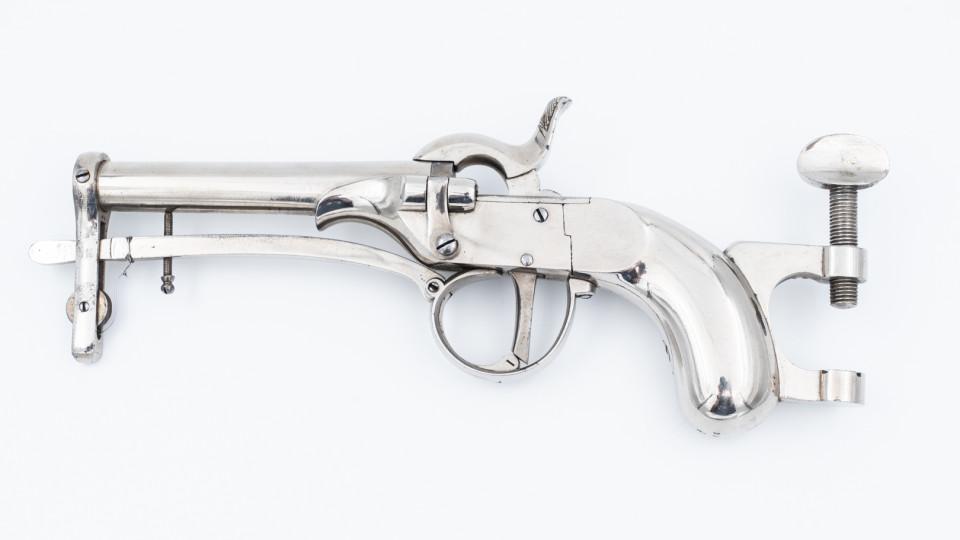
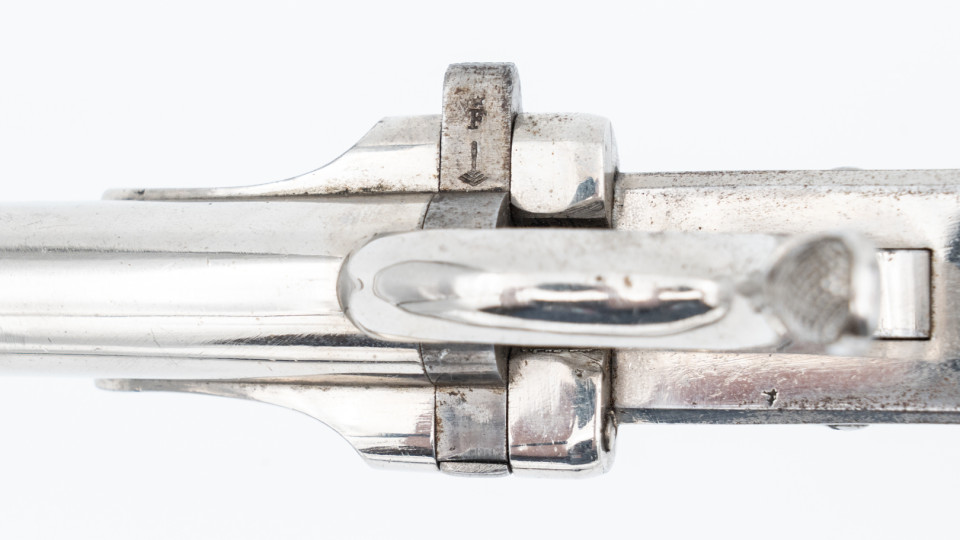
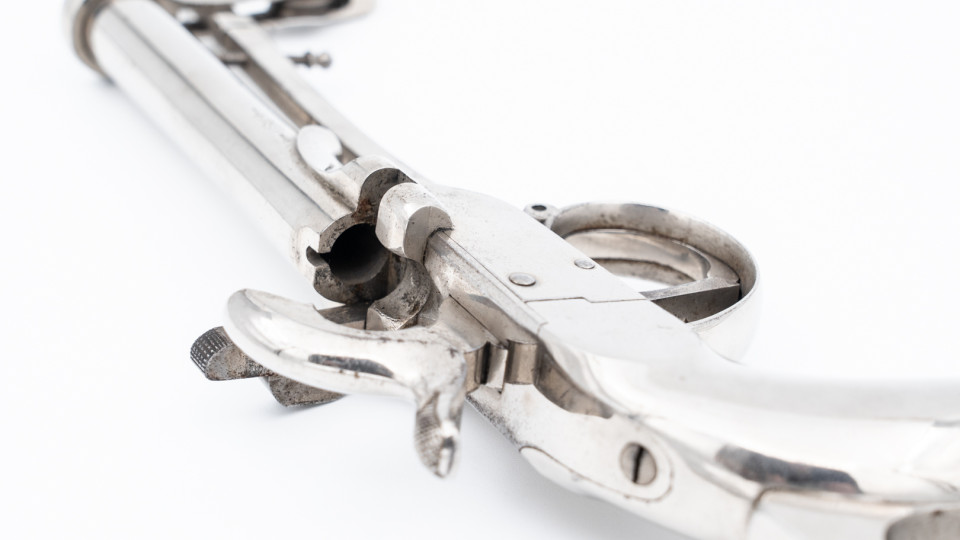
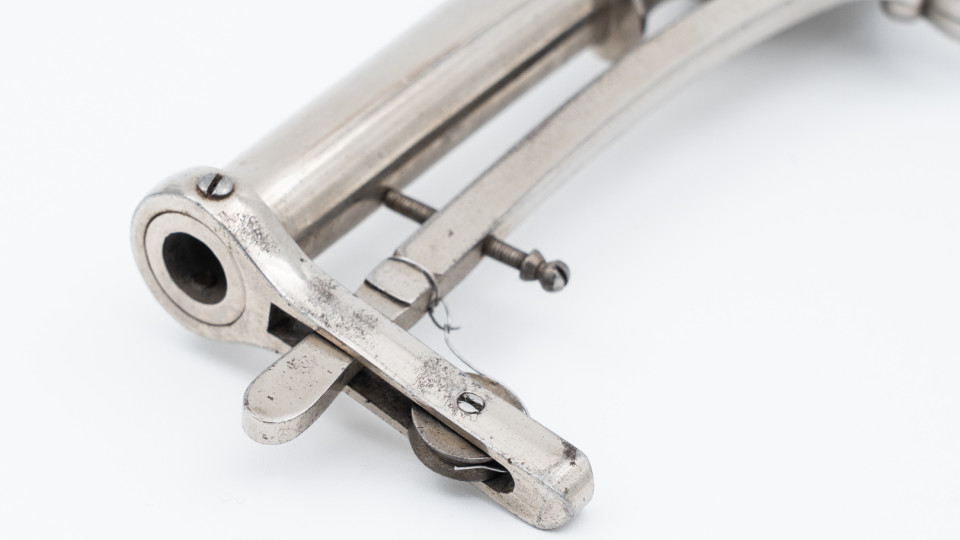
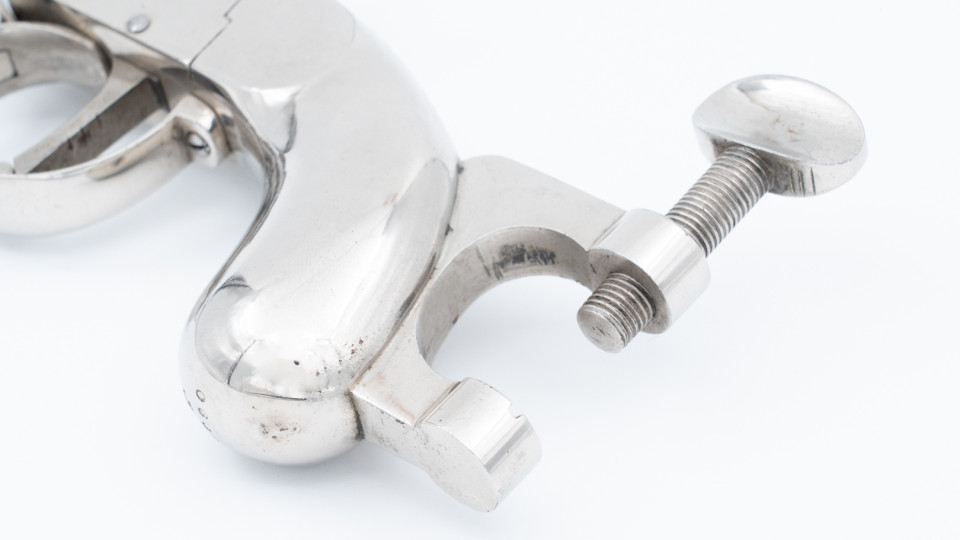
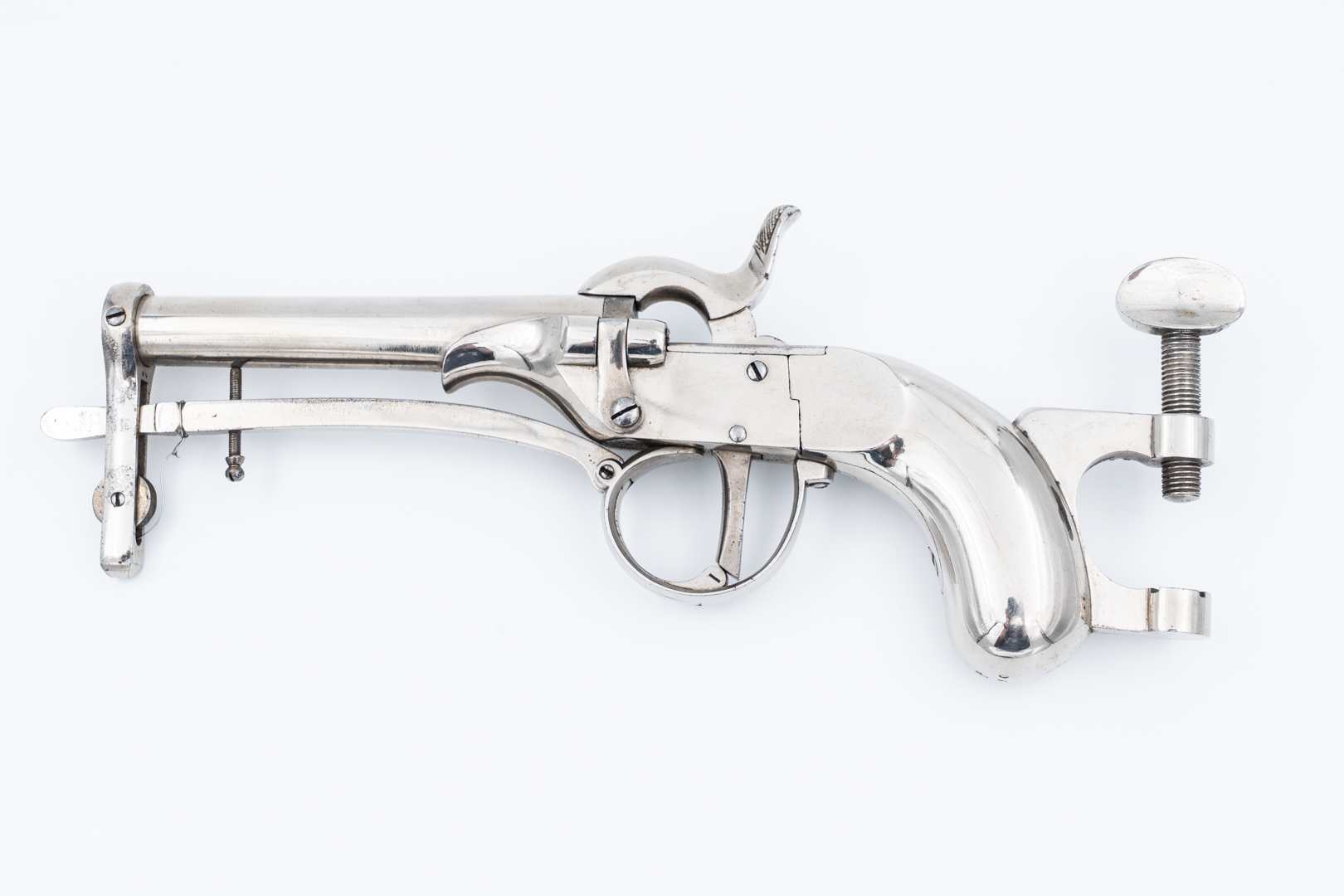
9 mm calibre pin pistol, known as a “secretary's pistol”,
Liège, second half of the 19th century
Grand Curtius Collection, Liège
Inventory no.: 08090
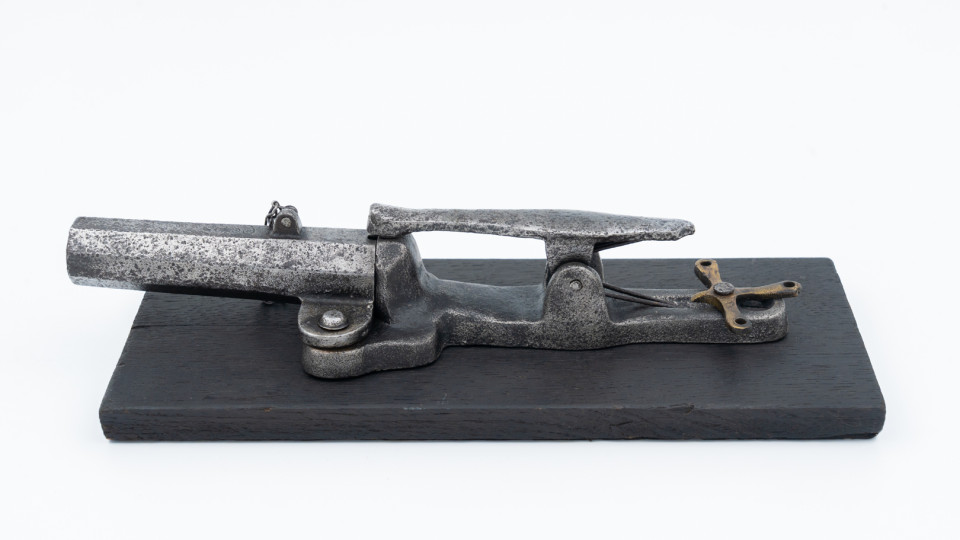
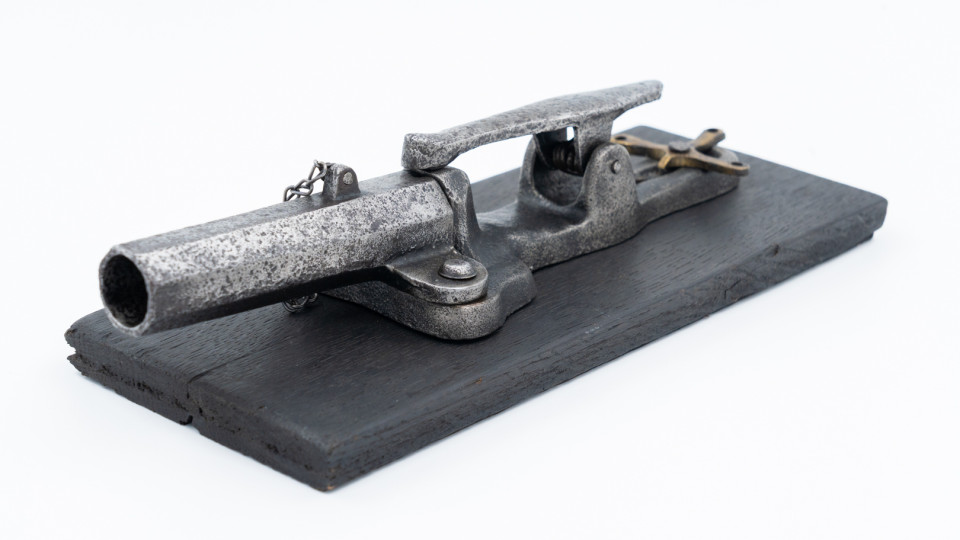
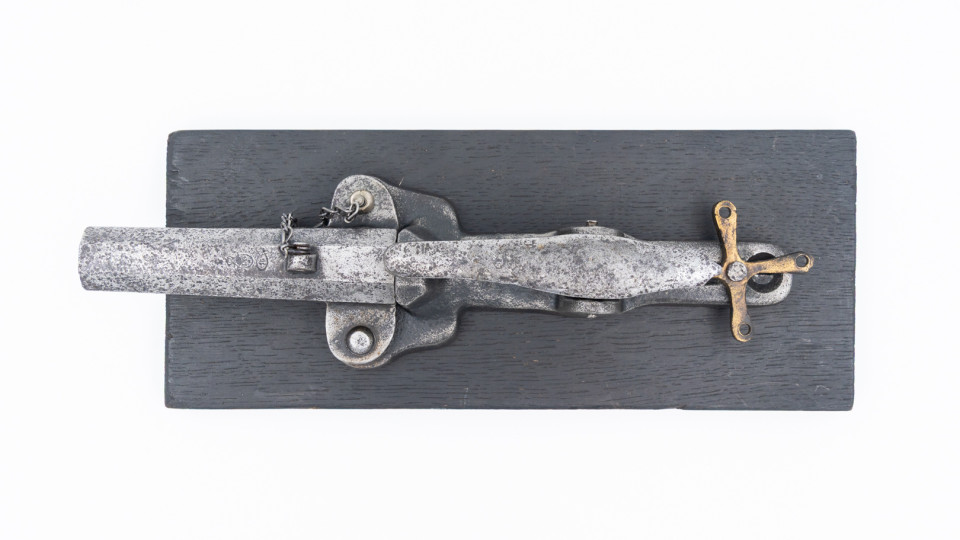
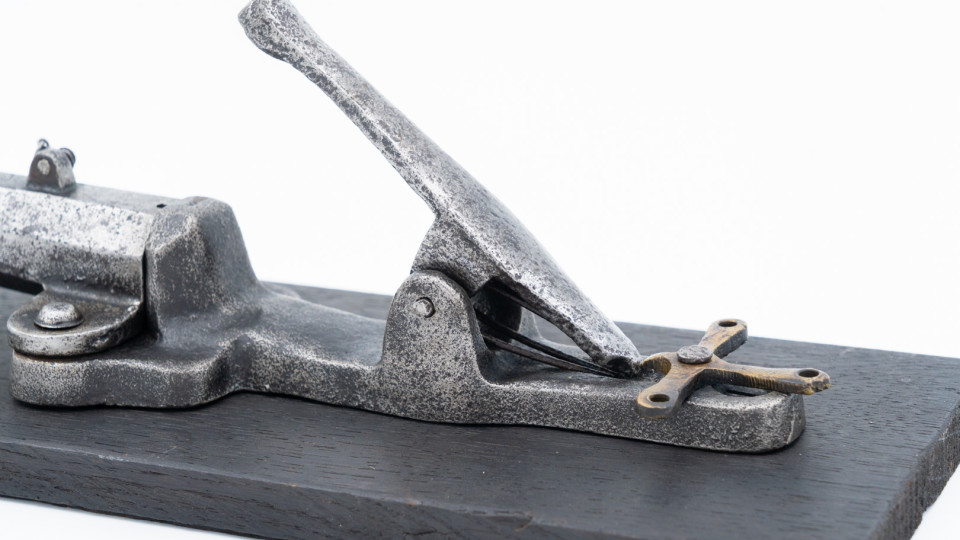
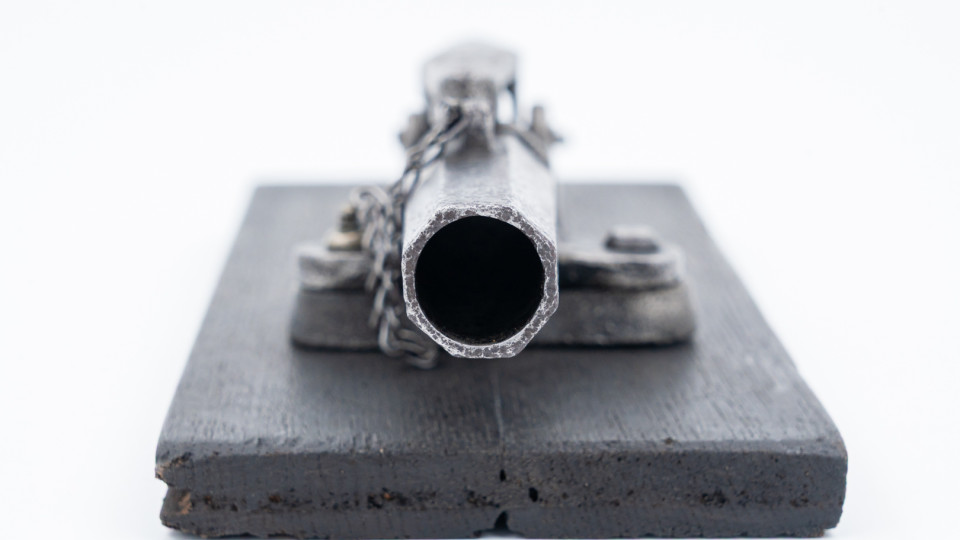
Booby trap, calibre 16,
Liège, second half of the 19th century
Grand Curtius Collection, Liège
Inventory no.: 18011
In the age of revolutions, there was obviously no question of technological security systems of the type we know today. However, the issue was not new, and the existing solutions were sometimes, to say the least, unconventional.
The so-called ‘secretary's pistol’ was a chrome-plated weapon manufactured in Liège and equipped with a mounting device. This device was frequently used by many shopkeepers. The screw mechanism allowed it to be attached to a piece of furniture, desk or secretary's desk facing the customer and used in the event of a robbery. The weapon fired 9 mm pin ammunition, which, given the height at which the pistol was placed, could cause serious damage... to the legs at best.
The other device is also mass-produced. The principle is that the device is fixed in the direction of the door, with the trigger wire attached to the door. Normally intended for foxes seeking poultry snacks, this type of device has also been used for home protection (as is the case with the piece shown here). If a potential intruder wanted to break into your home, this trap would give them a new hairstyle. Especially since the device shown here is designed to fire 16-gauge buckshot ammunition.
In both cases, it is certain that these types of models have caused more accidents than they have solved problems: do not try this at home! Fortunately, in 2026, these types of devices are illegal.
Loïc Servais
Conservateur du Département des Armes / Grand Curtius
Object of the month on video
Location of the exhibition
The objects are on display in the object of the month showcase. Entrance hall of the Grand Curtius Museum in Liège.
Photo copyright: City of Liège – Grand Curtius