Bourdaloue – This is not a sauce boat...
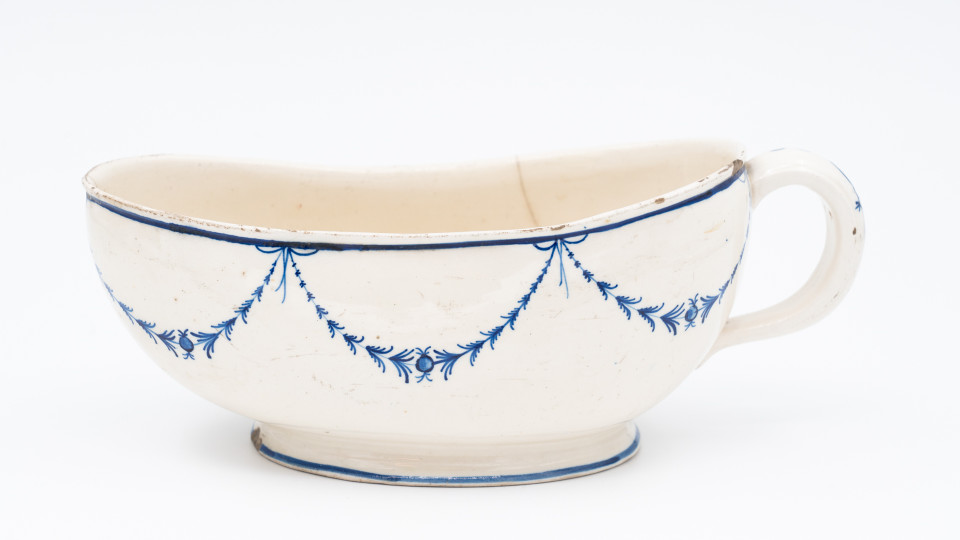
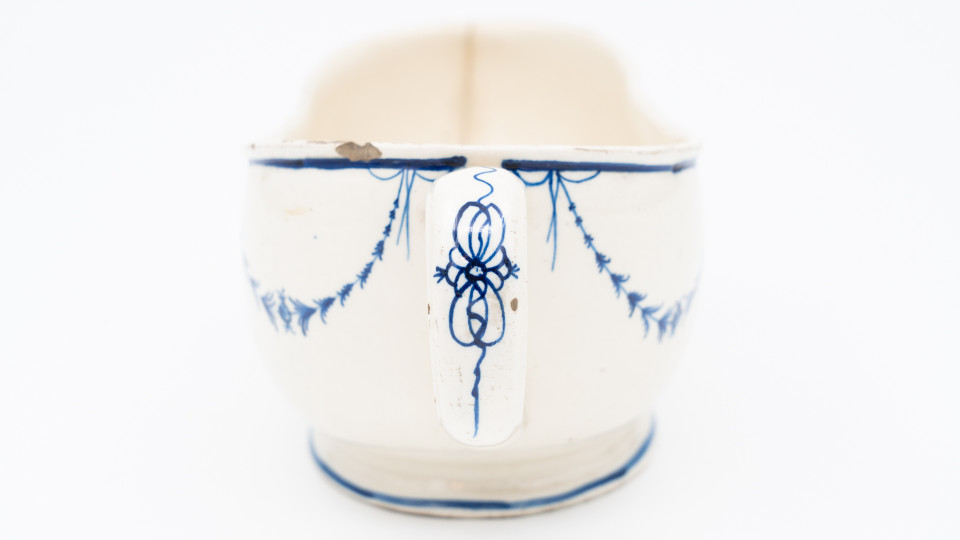
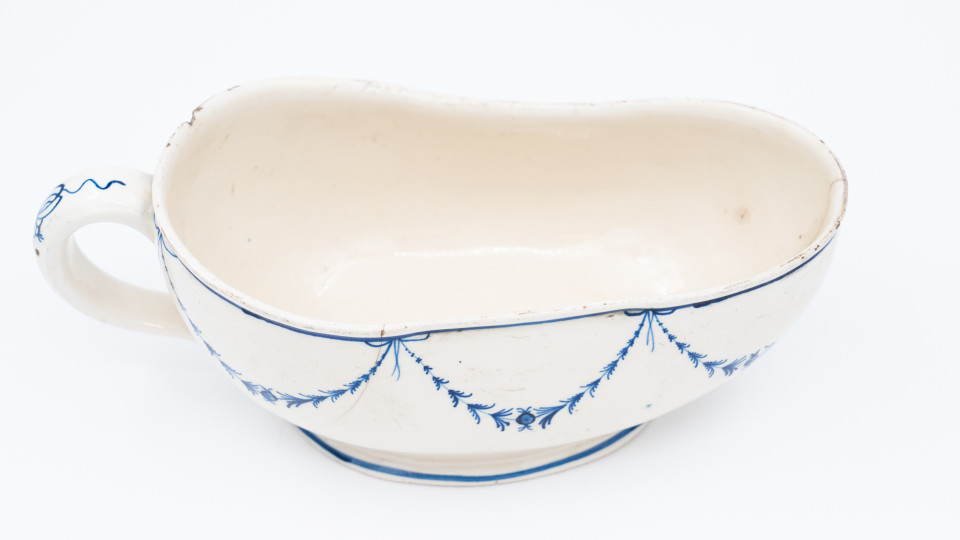
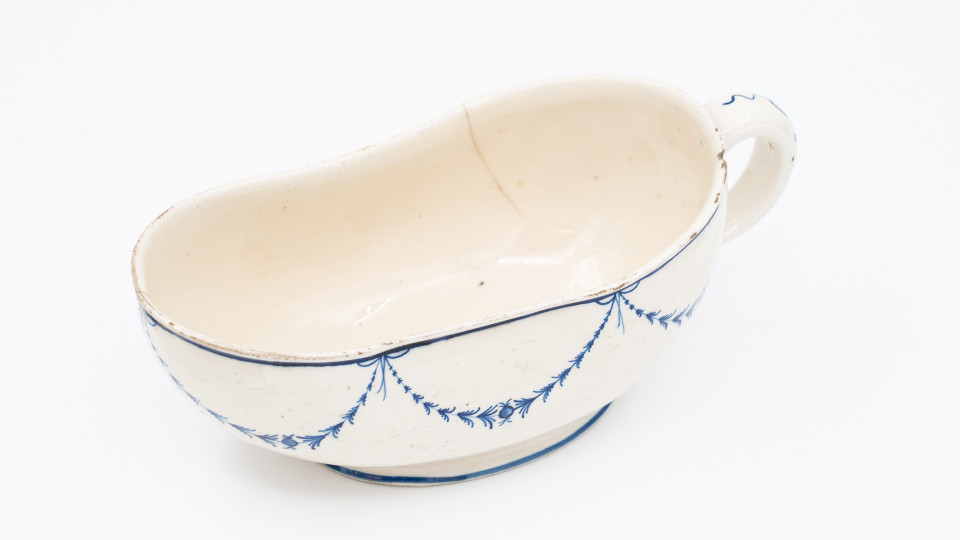
This is not a sauce boat
Bourdaloue
18th century
Fine earthenware
L. 23.5 cm
Donated by Léonie Jamar in 1939 to the I.A.L (Liège Archaeological Institute)
Grand Curtius Collection, Liège
Inventory No. I/39/252
In spite of its appearance, this fine earthenware item has a completely different function! In fact, it is a ‘bourdaloue’, which is a small portable chamber pot for women that enjoyed its heyday in the 17th and 18th centuries.
Its name is said to be an ironic reference to a Jesuit father at the court of Versailles, Louis Bourdaloue (1632-1704). He was nicknamed ‘the king of preachers and the preacher of the king’ and was chiefly known for having exercised his talents as an orator at the Royal Chapel, during long sermons that could last for several hours. During these masses, to avoid the uncomfortable situation of having to hold back a pressing need without being able to leave the service, the ladies of the court used this portable urinal. Discreetly placed under their basket dresses, the container was then emptied in the vicinity of the religious edifice by diligent servants.
Following this semantic tradition, high society is said to have used the bourdaloue discreetly but nevertheless in public. This method was made possible thanks to a sartorial custom of the time: the crotch in women’s knickers was in fact split, up to the 19th century, after which use of the bourdaloue also gradually declined.
The bourdaloue therefore pays witness to the change that occurred between the 18th century and beginning of 20th century with a move from mobile hygiene apparatus to installation of fixed bathrooms.
Today, we have very little information on this hygienic practice, as official texts of the time remained discretely silent on the subject. Perhaps a study of private diaries from the era could provide more concrete information on how it was used. It is all the more astonishing to find the subject dealt with very explicitly by one of the greatest artists of the 18th century. Indeed, in 1760, François Boucher (1703-1770) chose to make it the main subject of his painting “La Toilette intime” (a woman urinating).
The bourdaloue was perfectly adapted to female anatomy and was oblong in shape with a narrow centre. The raised ends and inward curving edges prevented splashes on clothes while the handle ensured it was easy to manipulate. Some even possessed a lid. Depending on how wealthy the owner was, she used a common earthenware recipient or a luxury item made of delicate and richly decorated porcelain. Certain specimens were made of metal and even silver.

Like many pieces of regional earthenware, the bourdaloue in the Grand Curtius bears no hallmark. However, stylistic analysis would suggest it came from factories such as Boch-Septfontaines or possible Liège, where decorations with knotted garlands of blue flowers could be found.
Carmen Genten
Curator / Grand Curtius Decorative Arts Department

La Toilette intime (a woman urinating)
Circa 1760
Oil on canvas
Private collection / DR
Object location
The artefacts are visible in the object of the month showcase in the entrance hall of the Grand Curtius Museum in Liège.
Captions for visuals
Bourdaloue - Grand Curtius Museum in Liège. Copyright: City of Liège - Grand Curtius.